


Music Lessons
Piano Lessons
Enroll Now!
- Duration 45 Minutes
- Duration 1 Hour

Stella Mamasiyeva
Music Instructor

Piano Lessons - Scientific and Emotional Benefits
Research such as Hyde et.al (2009) in the Annals of the New York Academy of Sciences, demonstrates that piano lessons induce structural changes in the brain. After just 15 months of keyboard training, children aged 6 showed increased voxel size in the motor hand area and the right auditory cortex, reflecting enhanced neural plasticity. This rewiring strengthens the corpus callosum, improving coordination between brain hemispheres, which boosts problem solving and memory-skills directly linked to academic performance.
Schellenburg (2004) further found that 36 weeks of piano lessons raised IQ scores in young and adolescent children and correlated with better academic outcomes in young adulthood, even when socioeconomic factors were controlled. These findings suggest piano training builds cognitive foundation that supports subjects like math and language.
Emotional Development Outcomes
- Boosts emotional well-being by engaging the limbic system, lowering cortisol, and increasing dopamine for improved mood.
- Fosters resilience and emotional regulation in children, aiding them in navigating social challenges.
- Encourages patience and emotional awareness through the structured yet creative nature of piano study.
- Promotes individuality and creativity by activating the prefrontal cortex, as shown in research by Schlaug et al. (2005).
- Builds confidence and identity by empowering students to interpret, compose, and improvise music that reflects personal narratives.
Composition and Songwriting Lessons
Enroll Now!
- Duration 45 Minutes
- Duration 1 Hour
Stella Mamasiyeva
Music Instructor
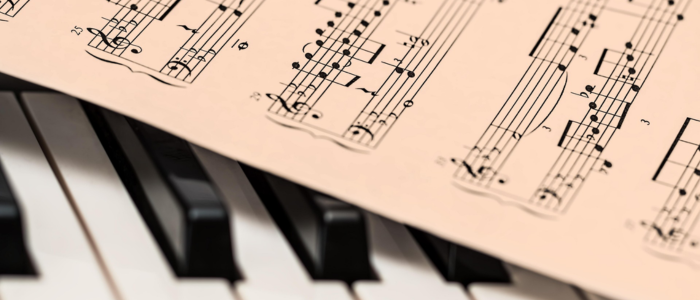
COMPOSITION and SONGWRITING LESSONS
Composition and Song writing lessons engage a rich interplay of cognitive skills, promoting brain development through creative problem solving, structural thinking, and linguistic integration. Research by Sloboda (1985) in The Musical Mind indicated that composing music activates the prefrontal cortex, enhancing executive functions ;like planning and decision making, which bolster academic performance in areas such as mathematics and writing. Patel (2011) in Music, Language and the Brain further shows that songwriting enhances verbal fluency and narrative skills supporting literacy. Schellenburg (2006) in The Journal of Educational Psychology also found that music training, including composition, correlates with higher IQ and academic achievement in children aged 6-11, laying strong foundation for intellectual growth.
Emotional Development Outcomes
- Fosters self-expression through composition and songwriting.
- Empowers identity formation by encouraging students to craft their own artistic voice.
- Builds individuality and confidence, as shown by Schlaug et al. (2005) in Nature Reviews Neuroscience.
- Transforms inner experiences into art, whether through orchestral works or songs.
- Promotes emotional well-being and self-discovery through creative musical engagement.
Voice Lessons
Enroll Now!
- Duration 45 Minutes
- Duration 1 Hour
Stella Mamasiyeva
Music Instructor

VOICE Lessons - Scientific and Emotional benefits
Voice lessons enhance auditory processing and language skills, as shown in Strait et. Al. (2011) in Behavioral and Brain Functions. Training the voice improves subcortical sound processing, which strenghthens reading comprehension and verbal IQ- key academic assets. Shcellenberg (2004) also found that singing lessons had a notable effect on academic achievement, with musically trained children outperforming peers in literacy and non verbal reasoning. This suggests Voice training primes the brain for linguistic and cognitive growth, supporting school readiness and long-term learning.
Emotional Development Outcomes
- Promotes relaxation and emotional balance by activating the vagus nerve during singing.
- Reduces anxiety and fosters empathy through vocal nuance awareness and emotional literacy.
- Supports social bonding and mental well-being, particularly during adolescent identity development.
- Engages the brain’s right hemisphere to enhance emotional and creative expression.
- Encourages self-discovery and artistic freedom by empowering students to explore vocal range, interpret songs, and compose lyrics.